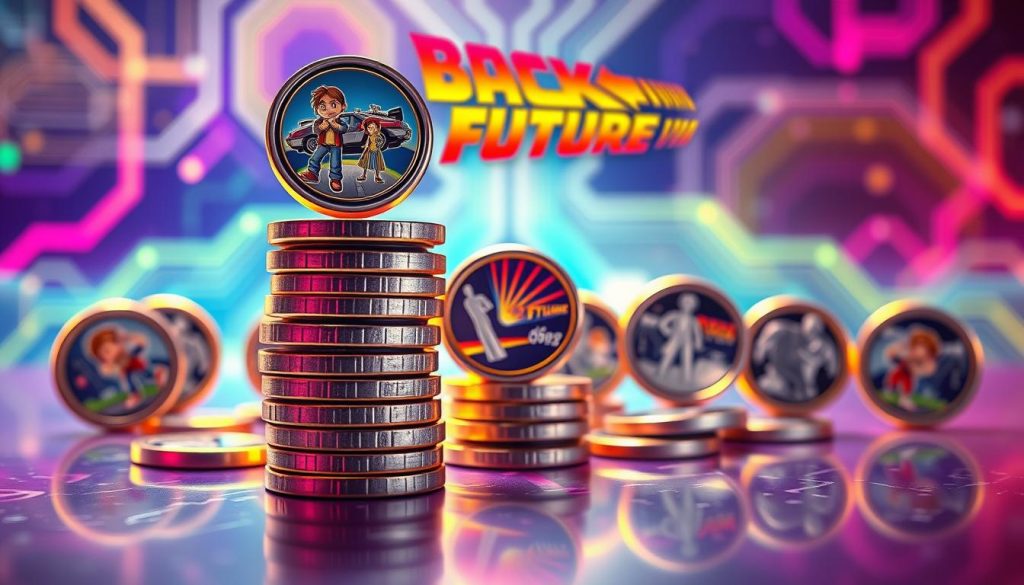
Back to the Future–themed meme coins sit at the crossroads of movie nostalgia and crypto speculation. They borrow the film’s famous scenes, props, and in-jokes to build an instantly shareable identity, and like every meme token they run on community energy rather than cash flow. As LiteFinance’s guide to meme coins puts it, these are digital assets built around internet memes, and their value does not depend on technology or business profits.
What Are Back to the Future Meme Coins?
These tokens use the movie’s time-travel imagery and quotable moments as branding. Some launch as pure joke tokens that chase viral attention; others pair the theme with collectible NFTs or staking features in the hope of keeping holders engaged after the initial buzz fades. They typically live on established networks such as Ethereum, BNB Chain, or Solana, where anyone can create a token and list it on a decentralized exchange.
That openness cuts both ways. Because a familiar theme is easy to copy, several tokens can share near-identical names, and a beloved movie reference says nothing about the team behind the contract. Treat the branding as marketing, never as evidence of quality.
Meme Coin Cycles: From Bonk to the 2026 Rebound
Movie-themed tokens ride the same tides as the wider meme coin market, and those tides track Bitcoin. Reuters reported that Bitcoin was on the charge in 2023, dragging the crypto market off the floor and electrifying bonk, a new meme coin. Fast Company described meme coins such as Dogecoin and Shiba Inu rallying again in early 2024 amid broader excitement for an expected Bitcoin halving. More recently, Yahoo Finance reported that memecoins rebounded in 2026, with the sector recovering more than $8 billion in market value and Solana remaining at the center of the rally.
The underlying pattern is consistent. When Bitcoin strengthens — a trend supported in recent cycles by institutional ETF involvement from firms such as BlackRock and Fidelity — traders rotate into riskier altcoins in search of outsized gains, and narrative-driven tokens can briefly outperform the majors. When sentiment turns, the reversal is just as sharp.
Why Nostalgia-Themed Tokens Spread
From Dogecoin and PEPE to $TRUMP and Dogwifhat, meme coins are viral, volatile, and often valueless in utility — and that virality is the whole product. A recognizable movie reference compresses an entire story into an image, which makes it ideal for Discord, Telegram, and Twitter/X, where these communities organize. An influencer mention can move a thinly traded token dramatically, but attention that arrives fast tends to leave just as fast. Hype that is not matched by on-chain activity is a warning sign, not a buy signal.
Community quality matters more than community volume. Steady moderation, transparent developers, and consistent activity after the spotlight moves on are better indicators of staying power than raw follower numbers.
How to Research a Back to the Future Token
Before considering any nostalgia token, check the fundamentals that memes cannot fake:
- Price and supply data: CoinMarketCap and CoinGecko for market cap, circulating supply, and the official contract address.
- On-chain activity: Nansen and Glassnode for wallet distribution, unique holders, and whale movements.
- Social momentum: LunarCrush and CoinTrendz to compare online buzz against real trading activity.
- Charting: TradingView for moving averages, MACD, Bollinger Bands, and price alerts.
- Contract safety: Etherscan to verify the contract, plus CertiK and RugDoc for audits and liquidity locks.
Healthy demand shows up as rising volume alongside a growing base of unique wallets. A rising price on shrinking activity, or a token where a handful of wallets controls most of the supply, points to manipulation risk rather than genuine interest.
How to Buy Safely
If you decide to proceed after research, the mechanics are straightforward. Set up a wallet such as MetaMask, fund it with the base token for the relevant chain — ETH for Ethereum, BNB for BSC, or SOL for Solana — and connect to a trusted decentralized exchange such as Uniswap, PancakeSwap, or Raydium. Copy the token’s contract address from a reliable listing rather than searching by name, since impersonator tokens with identical names are common. Confirm the contract on Etherscan, CoinMarketCap, or CoinGecko, check for audits and locked liquidity, set slippage carefully for thin pools, and always start with a small test trade before committing more.
Risks and Regulation
Meme coins are among the riskiest assets in crypto. Prices can collapse as quickly as they spike, concentrated ownership lets large holders move the market at will, and many projects never deliver anything beyond the joke. Rug pulls and exit scams remain a persistent threat for tokens without audits or locked liquidity.
Regulators are also paying closer attention to the category. In September 2026, California Governor Newsom signed legislation aimed at preventing public officials from issuing meme coins, protecting consumers, and holding bad actors accountable — a signal that rules around token issuance and promotion are tightening. Macro shifts and policy decisions can drain risk appetite without warning, so treat any meme position as money you can afford to lose entirely, keep positions small, diversify, and decide your exit plan before you enter.
The Bottom Line
Back to the Future–themed meme coins are a cultural experiment wrapped in a speculative asset. Nostalgia gives them reach, and meme coin market cycles give them moments of explosive attention, but neither gives them lasting value. Verify contracts, favor projects with audits and locked liquidity, measure the hype against on-chain reality, and size every position for the possibility of a total loss.